Building Universes from Code: The Physics of Friction
Series: The Evolution of Excellence - Part 2

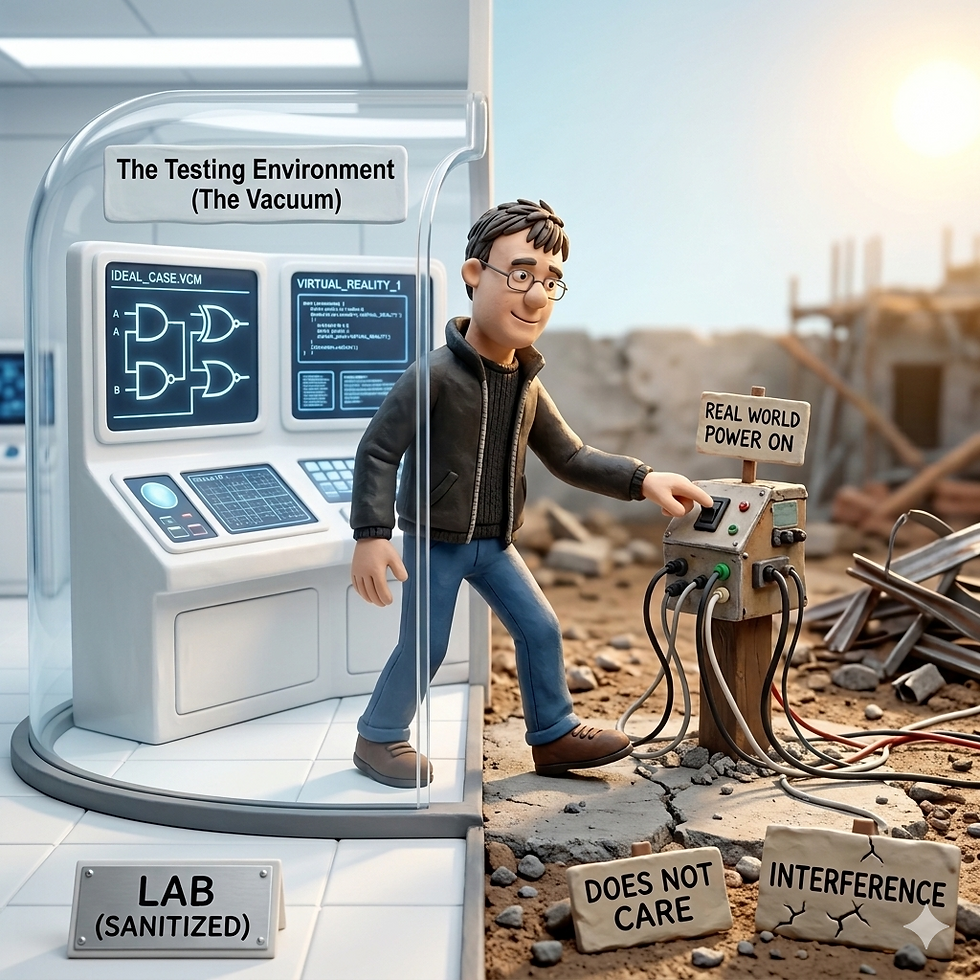
When we are building universes from code, we move past the baseline of "it works," we encounter the fundamental reality of the user experience: Friction. In a vacuum, an object in motion stays in motion. But the digital world is never a vacuum. It is filled with the air resistance of micro-delays, unintuitive menus, and feedback loops that don't quite click.
The Concept of Digital Aerodynamics
When we polish a product, we are performing a form of digital aerodynamics. We are smoothing the surfaces of our logic so the user can move through the experience without resistance. This means obsessing over the "feel" of a transition, the clarity of an error message, and the weight of a button click.
"If the user has to stop and think about how the software works, the physics of the experience has failed. They have bumped into the scaffolding."
Respecting User Momentum
By refining these micro-interactions, we ensure that the brilliance of the underlying engineering isn't hidden behind a rough surface. We are making the complex feel remarkably simple by respecting the user’s momentum.
But polish is more than just smoothing edges; it is about creating a system that feels cohesive. In our final post, we’ll explore how these thousand small refinements aggregate into the singular, powerful emergence of quality.
In our next post, we'll look at 'The Emergence of Quality' in 'Building Universes from Code'.
Join our waitlist for early access to the Red Nought Engine.
What is your "pet peeve" when it comes to unpolished software? Is it a clunky UI, a lack of feedback, or something else entirely? I’d love to hear your thoughts in the comments.


Comments