Building Universes from Code: The Friction of the Real

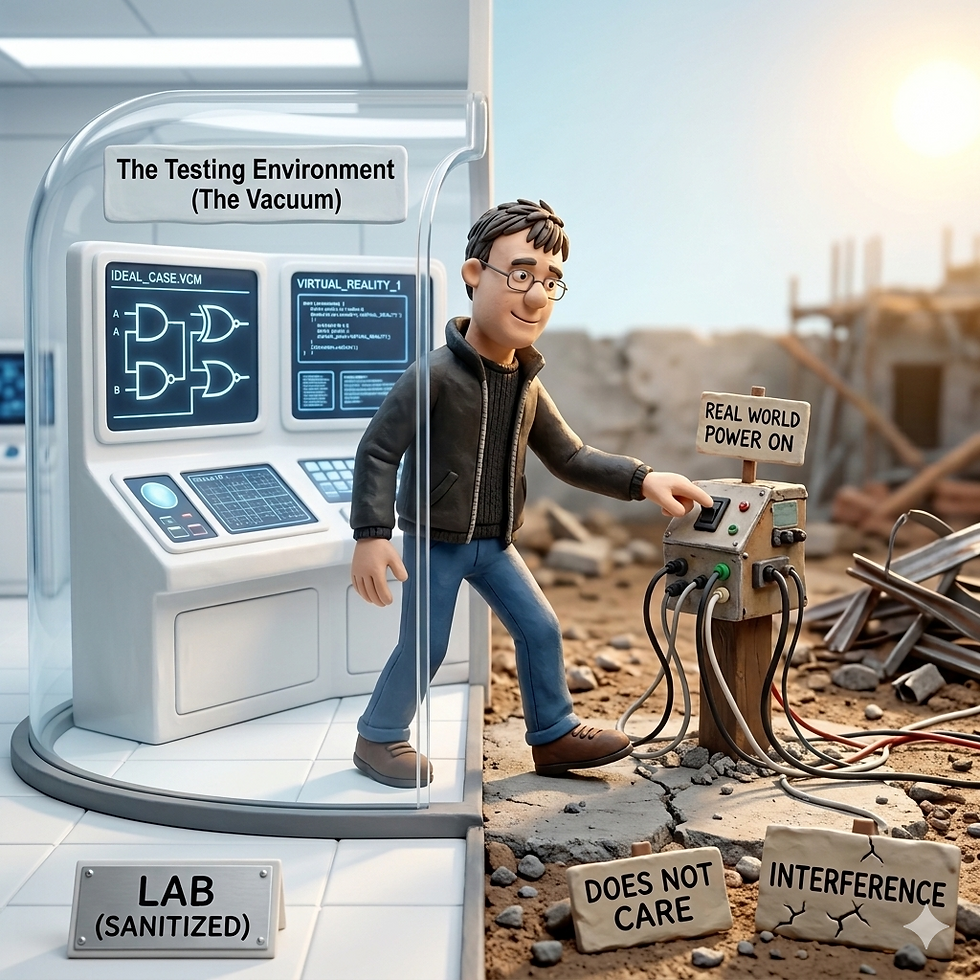
When you arrive at a field trial, the first thing you notice is the noise. Not just the sound, but the "entropy" of the physical space. The power supply might fluctuate. The ambient temperature shifts the timing of the processors. The network latency is no longer a fixed variable in a configuration file, but a fluctuating pulse determined by a thousand external factors.
This is the moment of truth for the architecture.
As you deploy the code, you are watching for the "cracks." You are looking to see if the abstractions you built are robust enough to withstand the friction of the real world. Every sensor reading, every data packet, every log entry becomes a vital sign.
You are no longer just an engineer; you are an observer of a new natural phenomenon.
There is a specific, quiet weight to this wait. You’ve done the math. You’ve run the unit tests. You’ve stressed the system in the lab. But as the product begins to interact with real users and real hardware, you realize that quality isn't just about correctness, it’s about resilience. It’s about how the system handles the "interference" of a universe it wasn't born in.
Building Universes from Code: Join the Conversation
What’s the most unexpected "real world" variable that ever broke your testing assumptions? I’m curious to hear about the edge cases that only appeared once you left the lab.
Build Your First Universe
Join our beta program for early access to the Red Nought no-code game engine.
What's Coming Next...
Building Universes from Code: In Part 3 of The First Light of Reality series, we'll explore "The Harmony of Success".
Comments